School Indoor Air Quality Trials Romania
Top of the class: Daikin commercial ventilation and air purification systems demonstrate the benefits of improved air quality on student performance.

Daikin recently participated in an extensive study in one of the school in Bucharest area to determine the potential effects on school pupils in terms of learning and health.
The HVAC specialist was approached by the Technical University of Construction Bucharest, Faculty of Building Services in light of Daikin’s recognised expertise and the established relationship with a local public school, in Bucharest area, which caters for pupils from grades one to eight.
Products in scope
- Airsensepro+ (Indoor Air quality sensor)
- Air Purifier Units (APU)
- VAM ventilation unit
Indoor Air Quality: An invisible problem
Outside of the home, children spend more time at school than anywhere else. In schools, where many children may share a single classroom, air pollutants can accumulate rapidly. Concentrated levels of CO2, Volatile Organic Compounds (VOC’s), in the form of vapour released from cleaning, building and classroom materials, dust particles and allergens including pollen can trigger a range of health problems. These range from headaches, loss of concentration, poor coordination, nausea and dizziness to respiratory complaints and damage to organs or the central nervous system. Bacteria and viruses including Covid-19 piggyback on airborne particles, risking the rapid spread of disease if unchecked.
The World Health Organisation (WHO) estimates that every day around 93% of the world’s children under the age of 15 breathe air that is so polluted it puts their health and development at serious risk. 1
A recent study by the Harvard Gazette has established a clear link between smaller PM2.5 particles, which can be absorbed into the blood stream and dementia. This creates the potential for short term cognitive decline and population-level health implications, with more than 57 million people worldwide currently living with the condition.2
Natural Ventilation can help alleviate air quality issues but opening windows may not always be possible or effective. The school which participated in the case study, for example, is situated in a densely populated urban area with poor levels of outdoor air quality and a high concentration of PM2.5 and PM10 particles. Aside from the ingress of outdoor pollutants and noise, which can be distracting in a learning environment, natural airflow patterns are unpredictable causing the uneven distribution of fresh air and/or the inadequate removal of pollutants. Excessive heat loss or gain from open windows may also compromise the energy efficiency of building heating or cooling systems.
About the Study
Air quality in many schools and kindergartens falls short of national and international standards. Without adequate ventilation, dangerous concentrations of carbon dioxide, dust and radon (a radioactive gas) can accumulate. The Healthy School project was set up with the aim of improving classroom design guidelines and to illustrate the effects of good Indoor Air Quality (IAQ) control, in conjunction with other comfort factors such as temperature, sound and light. The duration of the study was seven months, and it was run in one classroom with approximately thirty students present inside the classroom during the study.
Study design
Daikin worked with Professor Tiberiu Catalina to create four distinct test scenarios to understand the issues and determine appropriate equipment solutions:
Scenario 1: Benchmarking
Measuring existing air quality levels with no equipment installed.
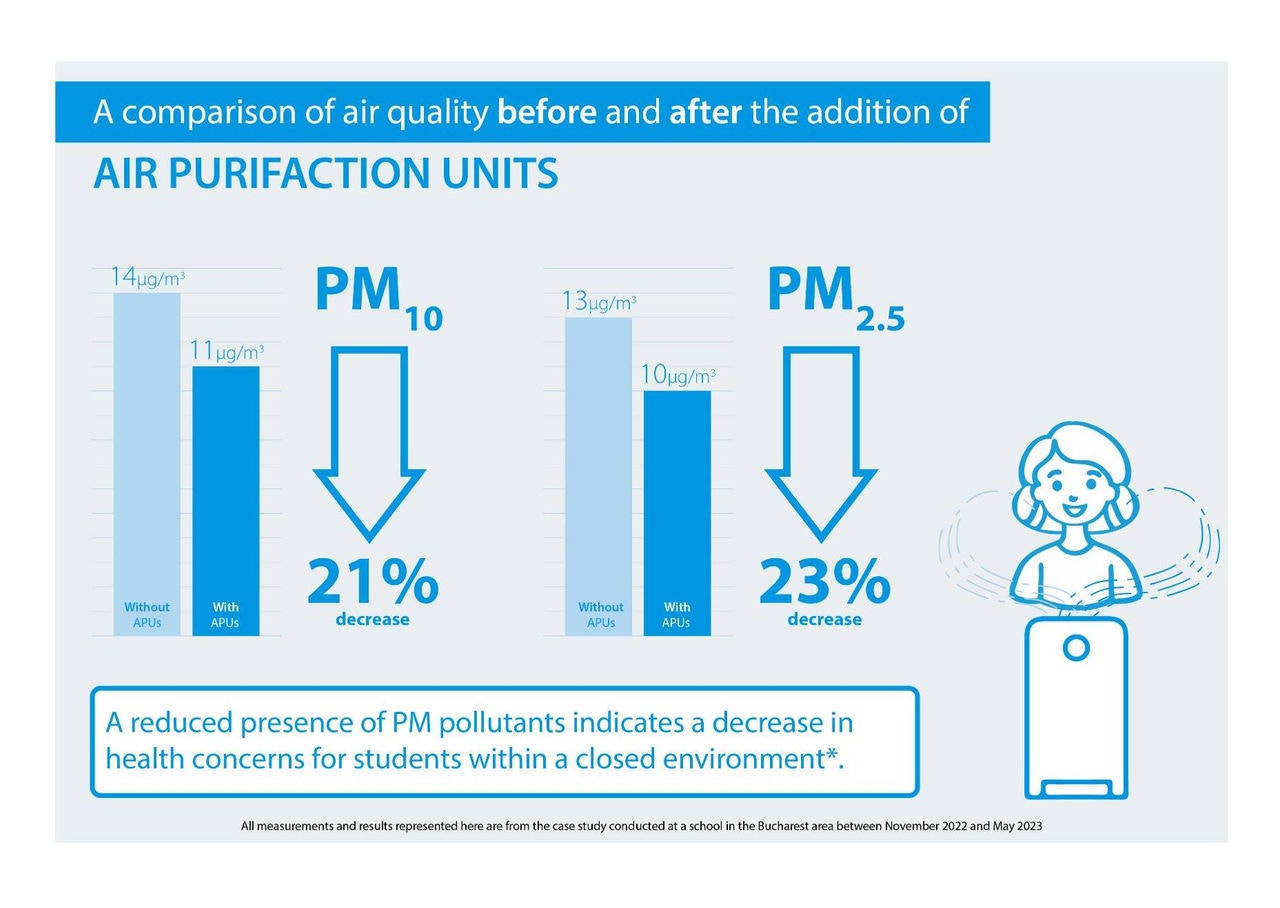
Scenario 2: Air purification (APUs)
Air purifiers installed in classrooms, with before and after evaluation of particulate matters (PM levels).
Scenario 3: APUs + ventilation
Heat recovery ventilation unit fitted, supplying fresh air to classrooms. Temperature, CO2, PM and VOC values measured prior to and after installation.

Scenario 4: APUs + ventilation + added filtration
For better air quality, the installed ventilation unit was equipped with the additional filters to remove minute particle pollutants entering from outdoor to indoor.
Installed Units
Daikin IEQ sensor is an IoT device measuring your well-being. Indoor Environment Quality (IEQ) is broader than indoor air quality (IAQ), and includes lighting, noise, and electromagnetic fields. It has 12 embedded different sensors that monitors 15 different parameters, and it connects to your Wi-Fi network. Indoor air quality measurement consists of CO2 concentration, levels of VOC compounds, and PM2.5 and PM10 particulate matters.
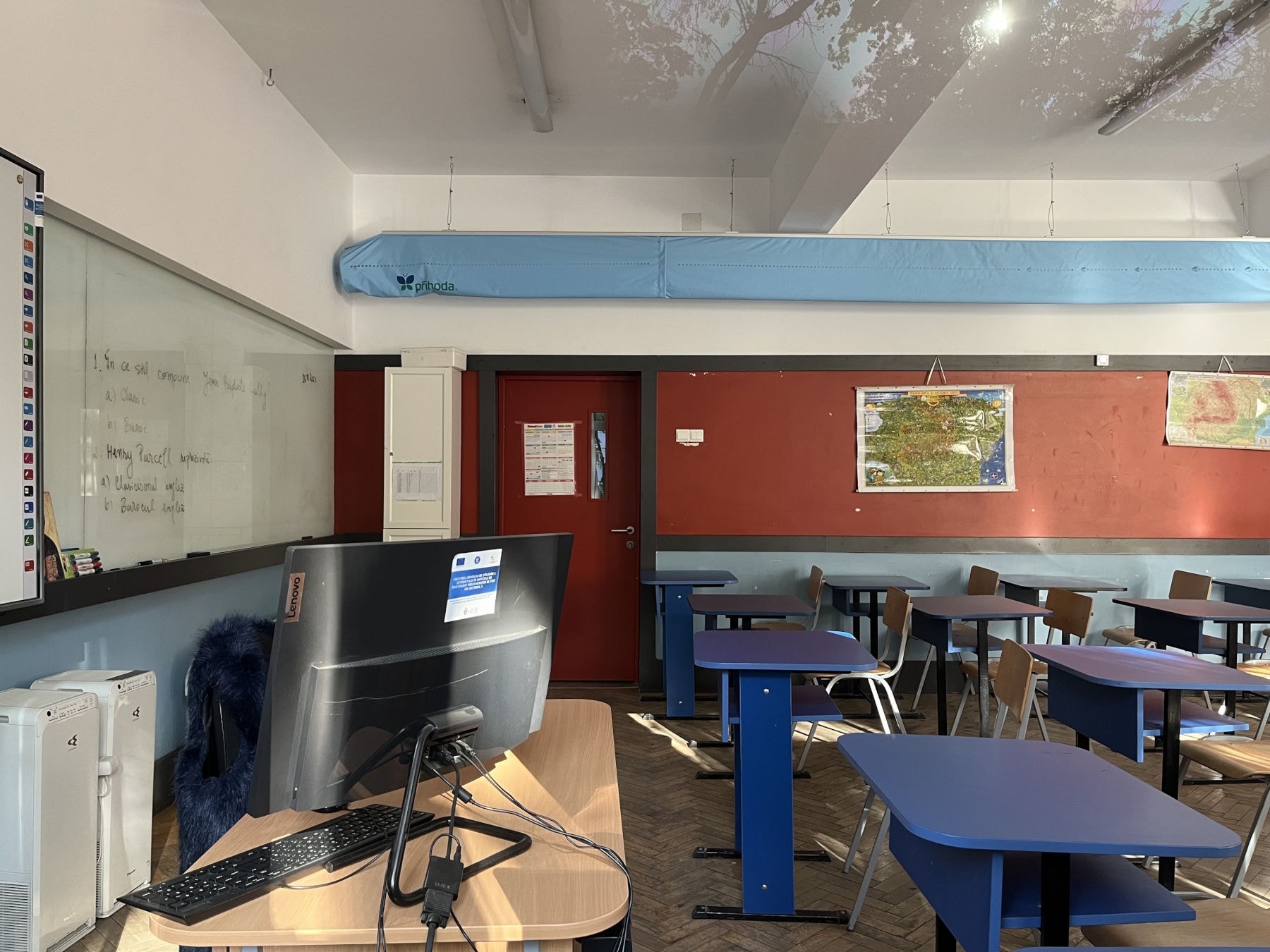
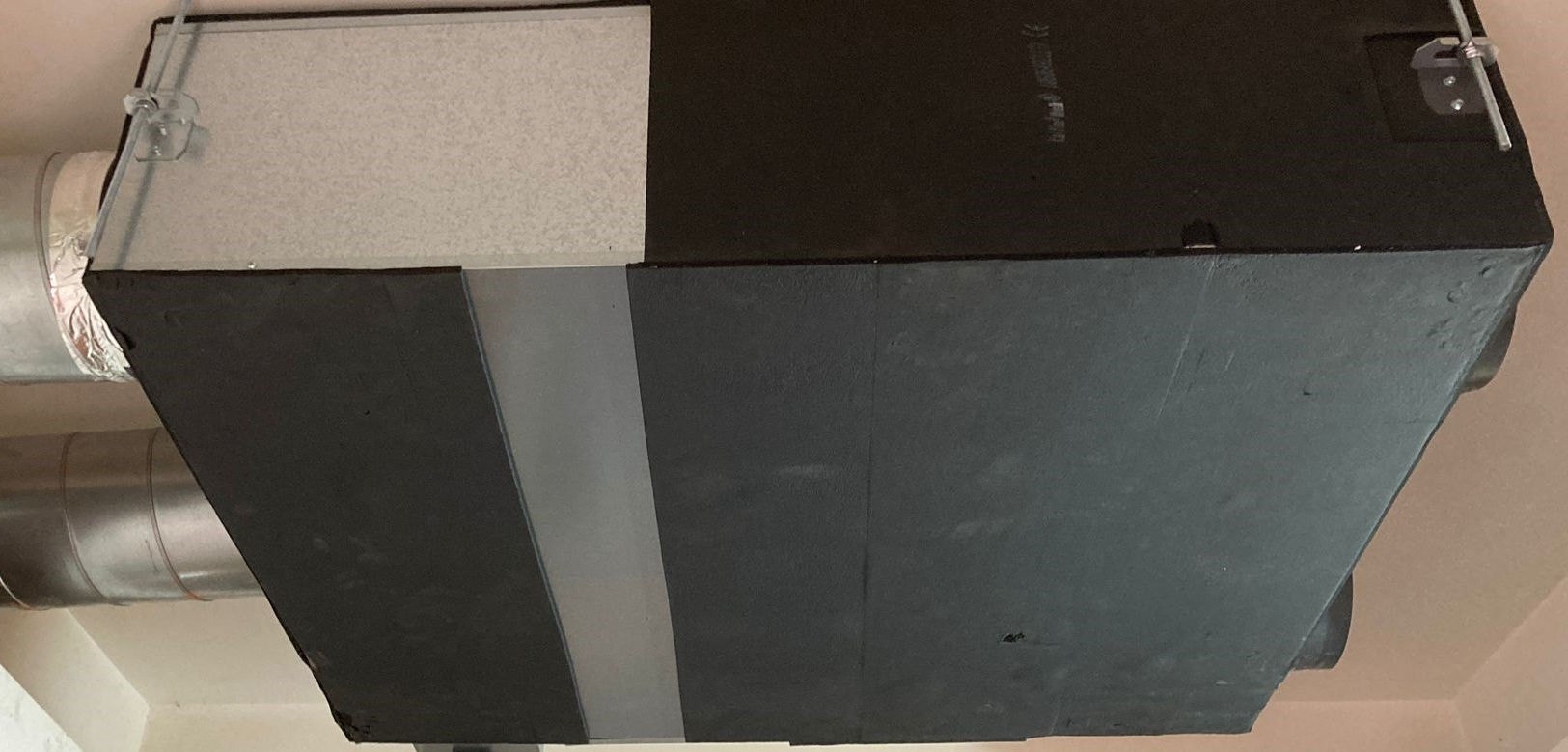
VAM: Mechanical Ventilation was provided by Daikin’s VAM unit with enthalpy heat exchanger, which saves energy and prevents heat losses through ventilation, using indoor heating, cooling and moisture recovery and free cooling when outdoor temperatures drop below indoor temperatures.
Daikin air purifier MCK55W: Air purification alongside mechanical ventilation was provided by the air purification unit MCK55W, which also comes with humidification feature. The electrostatic HEPA filter is designed to remove 99.97% of fine particles of 0.3μm.
Daikin products are seamlessly integrated in a total air conditioning and heat pump solution for simplicity. Heat recovery through the VAM units maintains the correct temperature and humidity for the required indoor conditions while reducing energy bills and offering the optimum comfort level to the occupants to concentrate even better.
Study conclusions
The Romanian study underlined the potential risk of enclosed classrooms where air cannot easily enter, allowing pollutants to remain and accumulate. The findings of the Healthy School project further validate the importance of installing appropriate IAQ monitoring and control measures.
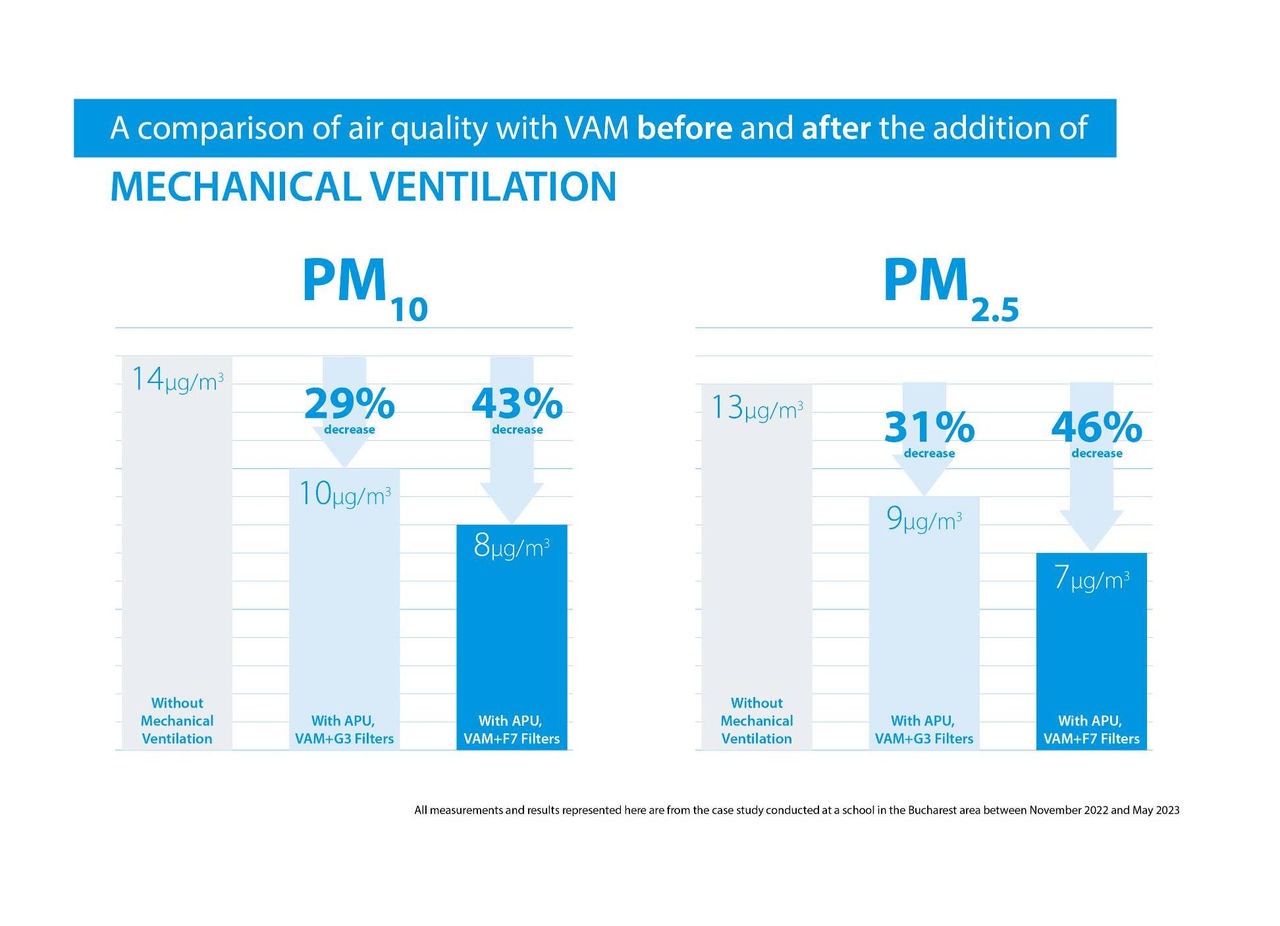
Where no equipment was installed (Scenario one), high levels of PM2.5 and PM10 particulates were recorded, with a high probability of illness arising. With the installation of Air purifiers (Scenario two), a lower risk of the PM levels by 29% was observed, but the greatest improvement was achieved by the installation of mechanical ventilation VAM units in conjunction with air purifiers (Scenario three). CO2 levels dropped significantly, up to 60%. Where VAM+G3 filters were equipped (Scenario three), a noticeable reduction in PM levels was observed. A further decrease was noted after the integration of highly efficient F7 filters (Scenario four), suggesting that the infiltration of outdoor PMs into classrooms can be drastically reduced.
Together with the APU and mechanical Ventilation, a substantial improvement in the Indoor Air Quality (IAQ) of classrooms and an optimal educational environment for students can be achieved.
“Clear improvements were observed with CO2 levels remaining largely below the recommended national value and a reduction in dust concentration on average of over 30%. Acoustically, noise levels were minimal, which is significant in the case of the air purifiers operating at maximum speeds to achieve these results. We note also that educational performance has been improved, with scientific studies in other countries showing a clear link between good IAQ control and grades. The feedback from pupils and teachers at the pilot school was positive with increased feelings of safety and well-being.”
Professor Tiberiu Catalina Technical University of Construction Bucharest
Find out more about IAQ here
For more information on Daikin ventilation solutions go to Daikin Ventilation
For more information on Daikin air purification solutions go to Daikin Air Purification
Sources:
[1] More than 90% of children breathe toxic air every day | WHO
[2] Study demonstrating consistent evidence associating PM2.5 & cognitive decline | The Harvard Gazette